

What Is Skin Discoloration?
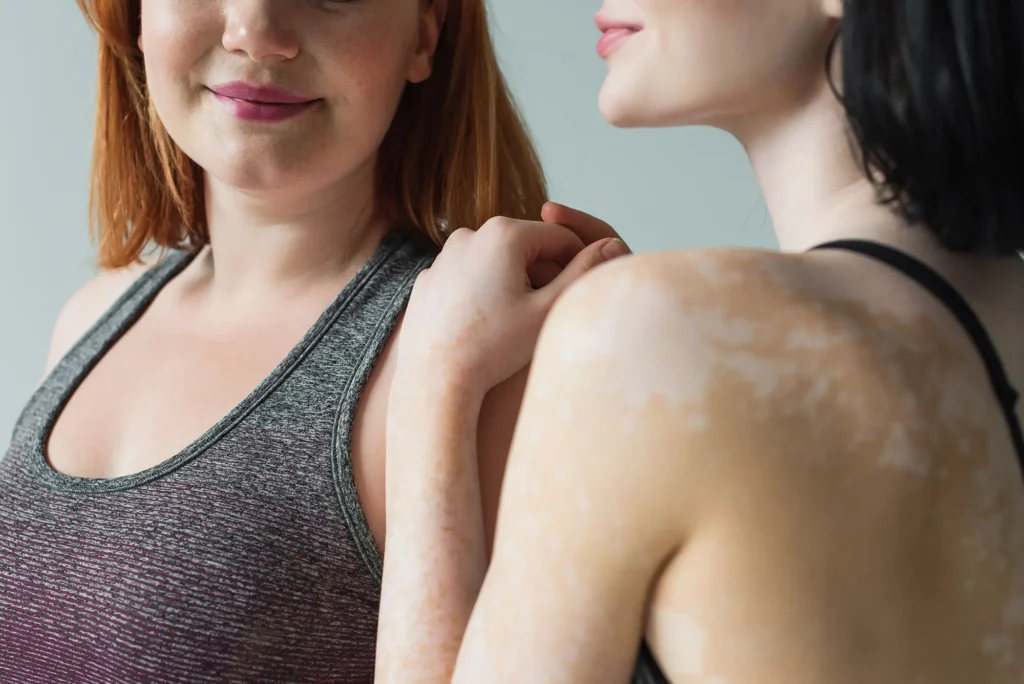
Skin discoloration refers to uneven pigmentation that creates irregular patches of color on the skin. This common concern appears as darkened areas (hyperpigmentation), lightened areas (hypopigmentation), or redness. When skin color becomes uneven, it can significantly impact one’s appearance and confidence.
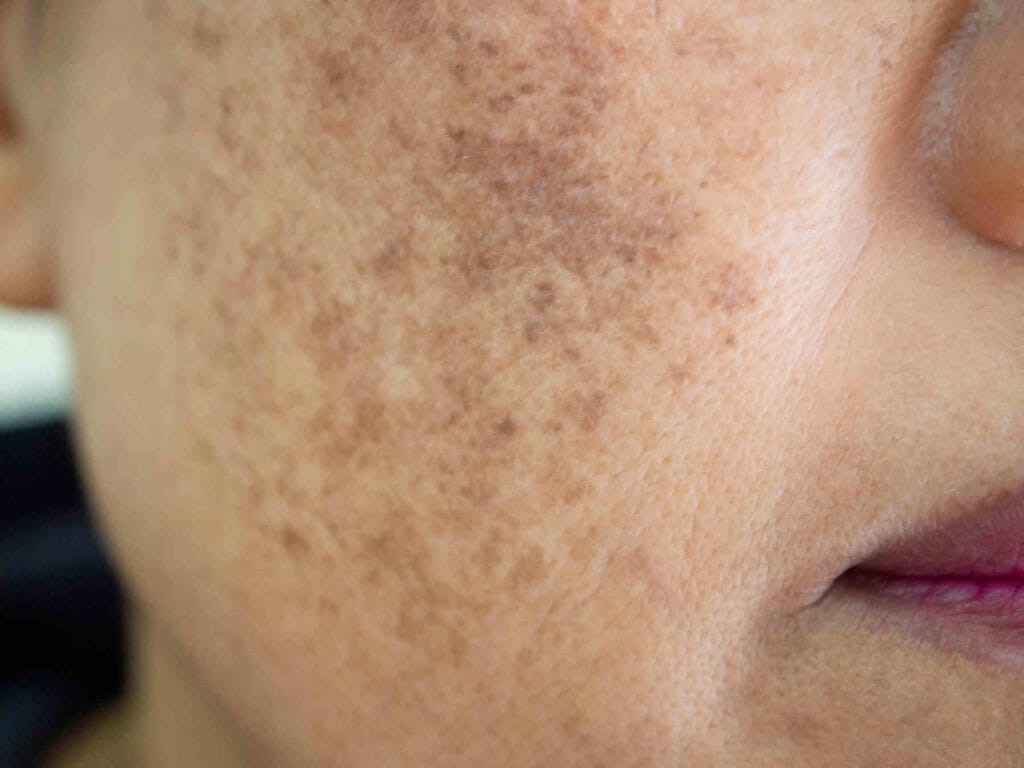
Types of Skin Discoloration
The Science Behind Discoloration
All skin color is determined by melanin, a pigment produced by melanocytes in the skin’s basal layer. The melanogenesis process (melanin production) involves several steps:
- Tyrosinase enzyme activation
- Conversion of tyrosine to DOPA and then to dopaquinone
- Formation of either eumelanin (brown/black pigment) or pheomelanin (red/yellow pigment)
- Transfer of melanin to surrounding keratinocytes (skin cells)
Disruptions at any point in this process can lead to irregular pigmentation. Specifically:
- UV exposure activates melanocytes and accelerates melanin transfer, initially as a protective mechanism
- Hormonal changes increase melanocyte sensitivity to stimulation
- Inflammation triggers melanin production as part of the wound-healing response
- Aging causes irregular melanocyte activity, with some areas overproducing and others underproducing pigment
Why Discoloration Is Challenging to Treat
Skin discoloration can be particularly challenging to address because:
Depth of pigment
Melanin can be deposited at different levels of the skin. Epidermal (surface-level) pigmentation responds more readily to treatment than dermal (deep) pigmentation.
Persistent triggers
Hormonal influences, genetic predispositions, and unavoidable UV exposure make some forms of discoloration recurrent despite treatment.
Inflammatory cascade
Once the pigmentation pathway is activated, it can create a cycle that perpetuates further pigmentation, particularly in sensitive skin types.
Skin memory
Melanocytes in previously hyperpigmented areas often remain more sensitive to triggers, making those areas prone to repigmentation.
Treatment Approaches
At Healthy Glow Aesthetics, we address discoloration through a comprehensive approach:
Professional Treatments:
- Specialized brightening facials with pigment-regulating ingredients
- Professional-strength chemical peels to remove damaged surface cells
- Microneedling to promote even skin regeneration
- LED therapy to calm inflammation and reduce redness
Key Treatment Principles:
- Inhibit tyrosinase activity to reduce melanin production
- Accelerate cell turnover to remove existing pigmented cells
- Protect from UV radiation to prevent pigment activation
- Reduce inflammation that can trigger hyperpigmentation
- Support the skin barrier to minimize pigmentation triggers
The most effective approach to treating discoloration involves consistent use of targeted ingredients in a comprehensive regimen, combined with professional treatments that accelerate results. During your consultation, our skincare professionals will analyze your specific discoloration concerns and create a personalized protocol to effectively address your unique pigmentation issues while restoring your skin’s natural radiance and even tone.
Start with your skin
What would you like to work on?
If you are not sure where to start, book a consultation and let the provider match the treatment to your skin, timeline, and comfort level.
Acne
Personalized acne care combines professional treatments and home care to support clearer, calmer-looking skin.
Dark spots & melasma
Refresh tone, texture, acne congestion, and discoloration with professionally selected chemical peels.
Skin aging
Non-invasive Sofwave™ treatment supports a firmer, refreshed appearance after provider-led candidacy review.
Sun damage
Hydrafacial, chemical peels, SkinPen, Sofwave, and skincare guidance for sun-stressed skin.
Visit
2821 E Commercial Blvd,
Suite 200
Fort Lauderdale, FL 33308. Free parking on site.
Monday – Friday
10AM – 6PM
Saturday
9AM – 5PM
Sunday
10AM – 5PM